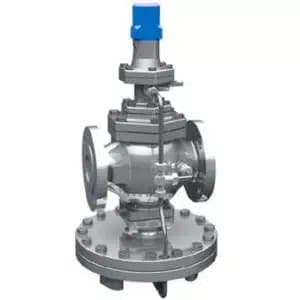
Super Duplex Pressure Reducing Valve
High Performance • Durable • Leak Proof
Super Duplex Pressure Reducing Valve controls and stabilizes high-pressure fluids in corrosive or industrial systems.
Technical Specifications
Key Features & Applications
Seawater, brine and chloride-bearing process systems often need downstream pressure control without exposing the body and trim to rapid localised corrosion. A Super Duplex pressure reducing valve combines automatic pressure regulation with corrosion-resistant pressure parts for marine and offshore service. African Valve is a prominent Super Duplex Pressure Reducing Valve Manufacturer in Africa, supplying South Africa, Nigeria, Egypt, Angola, other African countries and export projects. The valve reduces a higher inlet pressure to a controlled downstream pressure by varying the opening between the plug and seat. A diaphragm, piston or pilot system senses downstream pressure and moves the trim against a spring or control signal. When downstream pressure rises above the set value, the valve moves toward the closed position; when pressure falls, it opens further. Cast bodies may use ASTM A995 Grade 5A, while forged trim, stems or pressure parts may use ASTM A182 F53 or F55. The plug, seat, stem, guide parts and sensing connections should use compatible materials because lower-alloy trim can corrode even when the body remains unaffected. Single-seat or balanced trim may be used depending on pressure drop and capacity. Balanced trim reduces the effect of inlet pressure on actuator force, while hardened or metal seating can improve resistance to erosion where velocity is high. Size Range: DN15 to DN300 The valve should be sized from minimum, normal and maximum flow. An oversized valve may operate close to the seat and hunt, while an undersized valve can create excessive velocity and fail to maintain downstream pressure. Super Duplex pressure reducing valves are used in desalination, seawater distribution, offshore utility systems, brine circuits, produced-water treatment and chloride-bearing chemical lines. They are also applied on marine service-water systems where stable downstream pressure protects equipment. MTCs, PMI and ferrite measurement verify the body and trim materials. Dimensional inspection checks seat alignment, plug travel and end connections. Hydrostatic shell testing, seat-leakage testing and pressure-control checks confirm containment and regulation. Pilot-operated units may also undergo set-pressure and response testing. African Valve supplies Super Duplex pressure reducing valves for marine, offshore and process projects across Africa. The enquiry should include fluid composition, inlet and outlet pressure, flow range, temperature, cavitation risk, trim type, set-pressure accuracy and inspection scope.Super Duplex Pressure Reducing Valve Manufacturer in Africa
How Pressure Reduction Is Achieved
Direct-acting designs suit smaller capacities and simpler duties. Pilot-operated valves provide closer control where flow varies widely or a higher capacity is required. Selection should be based on inlet pressure, outlet pressure, flow range and required stability rather than pipe size alone.Super Duplex Body and Trim
Super Duplex offers high strength and strong resistance to chloride pitting, crevice corrosion and stress-corrosion cracking. Warm seawater, stagnant sensing lines and differential aeration still need attention. Elastomers and diaphragms must be selected separately for chemical compatibility and temperature.Trim, Seat and Control Range
Cavitation and flashing should be checked when the pressure reduction is severe. Multi-stage trim, anti-cavitation cages or staged pressure reduction may be required to control velocity and prevent damage. These features depend on the final operating data and should not be assumed from the product name.Technical Specifications
Pressure Ratings: ASME Class 150 to Class 900
Design Standards: ASME B16.34 and IEC 60534 where applicable
Testing Standard: API 598 or project-specific control-valve testing
End Connections: Flanged RF/RTJ, threaded or butt weld
Operation: Direct acting, pilot operated or actuator controlled
Body Materials: ASTM A995 Grade 5A, ASTM A182 F53 or ASTM A182 F55
Trim Options: Single seat, balanced plug or multi-stage trim
Seat Options: Metal, PTFE, PEEK or project-specified material
Control Function: Automatic downstream pressure regulationSizing and Set-Pressure Stability
Required accuracy, allowable noise and maximum pressure drop should be stated in the enquiry. Pilot lines should be routed to avoid blockage, trapped gas or stagnant corrosive pockets.Industrial Applications
Manufacturing and Inspection
Pressure-Control Supply Across Africa