Liquefied natural gas (LNG) infrastructure operates at extremely low temperatures, requiring specialised valves designed to provide reliable isolation, prevent leakage and withstand thermal stress. LNG is typically stored and transported at approximately −162°C at atmospheric pressure, while pure methane has a normal boiling point of approximately −161.5°C at 1 atmosphere. Since commercial LNG contains varying proportions of methane and other hydrocarbons, its actual boiling and operating temperatures depend on composition and pressure.
These conditions make material selection, sealing performance and mechanical design critical to plant safety and operational efficiency. Cryogenic valves are used in LNG liquefaction plants, storage terminals, loading systems, regasification facilities and associated gas processing infrastructure.
1. Cryogenic Valve Design Requirements
Cryogenic service introduces engineering challenges that differ from conventional industrial applications. Metals contract as temperatures decreases, sealing materials can lose flexibility, and clearances between components may change during cooling. Valve designs must accommodate these effects while maintaining reliable operation throughout repeated cooling and warming cycles.
⁕Extended Bonnet Design
An extended bonnet is a common feature of cryogenic valves. It separates the stem packing and actuator connection from the cold valve body, helping maintain a suitable temperature around the stem sealing arrangement. The extended section also provides space for a vapour region above the cryogenic liquid, helping reduce excessive cooling at the packing. Bonnet length and installation orientation must follow the manufacturer's design requirements and the applicable project specifications.
⁕Stem Sealing and Leakage Prevention
Stem packing must maintain a reliable seal despite thermal contraction and temperature cycling. In LNG facilities, leakage prevention is particularly important because escaping natural gas can create fire and explosion hazards. Suitable packing systems, controlled gland loading and properly designed stem surfaces help maintain sealing performance. Where required, additional provisions may be specified for fugitive-emission control and fire-safe performance.
⁕Thermal Contraction and Pressure Trapping
Valve bodies, stems, seats and closure components may contract at different rates during cooling. Engineers must account for these changes when designing clearances, selecting materials and determining operating torque. Trapped liquid is another important consideration. LNG isolated within a valve cavity can generate excessive pressure as it warms and expands or vaporises. Depending on the valve design, cavity pressure-relief provisions may be required to protect the valve and connected equipment.
2. Materials Used in Cryogenic LNG Valves
Material selection is essential for maintaining mechanical strength, toughness and sealing integrity at low temperatures. Materials must be suitable for the specified minimum design temperature, process pressure, fluid composition and external environment.
⁕Austenitic Stainless Steel
Austenitic stainless steels are widely used in cryogenic applications because they generally retain good toughness at very low temperatures. Common options include 304/304L and 316/316L stainless steels. Cast equivalents, including ASTM A351 CF8M and CF3M, may be specified for appropriate components and designs. Grade 316/316L can provide additional corrosion resistance in certain environments. However, the final selection should consider process-fluid compatibility, corrosion exposure, pressure and project requirements.
⁕Body, Trim and Seat Materials
Component / Material | Description and Selection Requirements |
Valve Body | Must be suitable for the specified minimum design temperature, operating pressure and process fluid. Material grades intended for temperatures around −46°C should not automatically be used for LNG service near −162°C. |
Trim Components | The stem, ball or disc, and other internal components must maintain suitable mechanical properties and dimensional stability under cryogenic operating conditions. |
Seat Materials | Engineered polymer seats can provide effective shut-off when qualified for the required temperature and pressure. Metal seats may be preferred depending on leakage criteria and process conditions. |
Gaskets and Packing | Must maintain sealing performance at the specified operating temperature. Conventional elastomers and polymers should not be assumed suitable without appropriate qualification. |
Material Compatibility | All components, including fasteners and sealing elements, must be evaluated as a complete system for thermal contraction, embrittlement, permeability and changes in sealing characteristics. |
Minimum Design Temperature | All materials must be specifically qualified for the actual minimum design temperature and intended service conditions. |
3. Types of Cryogenic Valves Used in LNG Facilities
Different valve types perform isolation, flow regulation and reverse-flow prevention duties across LNG facilities.
Valve Type | Function and Application in LNG Facilities |
Ball Valve | Provides quarter-turn operation and tight shut-off for isolation. Cryogenic designs may include extended bonnets, specialised seats and cavity pressure-relief provisions. |
Gate Valve | Provides on-off isolation in suitable process and pipeline applications where a relatively unobstructed flow path is beneficial. |
Globe Valve | Supports flow regulation and throttling where the required pressure drops and process conditions permit. |
Butterfly Valve | Can be used in suitable low-temperature applications when its materials, seat design and operating limits are qualified for cryogenic service. |
Check Valve | Prevents reverse flow and helps protect pumps, compressors and other process equipment. |
4. Cryogenic Valve Testing and International Standards
Routine ambient-temperature testing alone does not demonstrate suitability for LNG service. The inspection and qualification programme must reflect the valve design, operating temperature, pressure rating and project requirements.
⁕Pressure and Seat Leakage Testing
Shell testing verifies the pressure-containing boundary, while seat testing evaluates the closure's ability to restrict leakage. Test pressures, durations and acceptance criteria depend on the applicable standard and purchase specification. Relevant references include API 598 for valve inspection and testing, API 6D for applicable pipeline valves, ISO 28921-1 for low-temperature industrial isolation valves, and BS 6364 for cryogenic valve testing. The applicable standard and edition should be confirmed for each project.
⁕Cryogenic Performance Testing
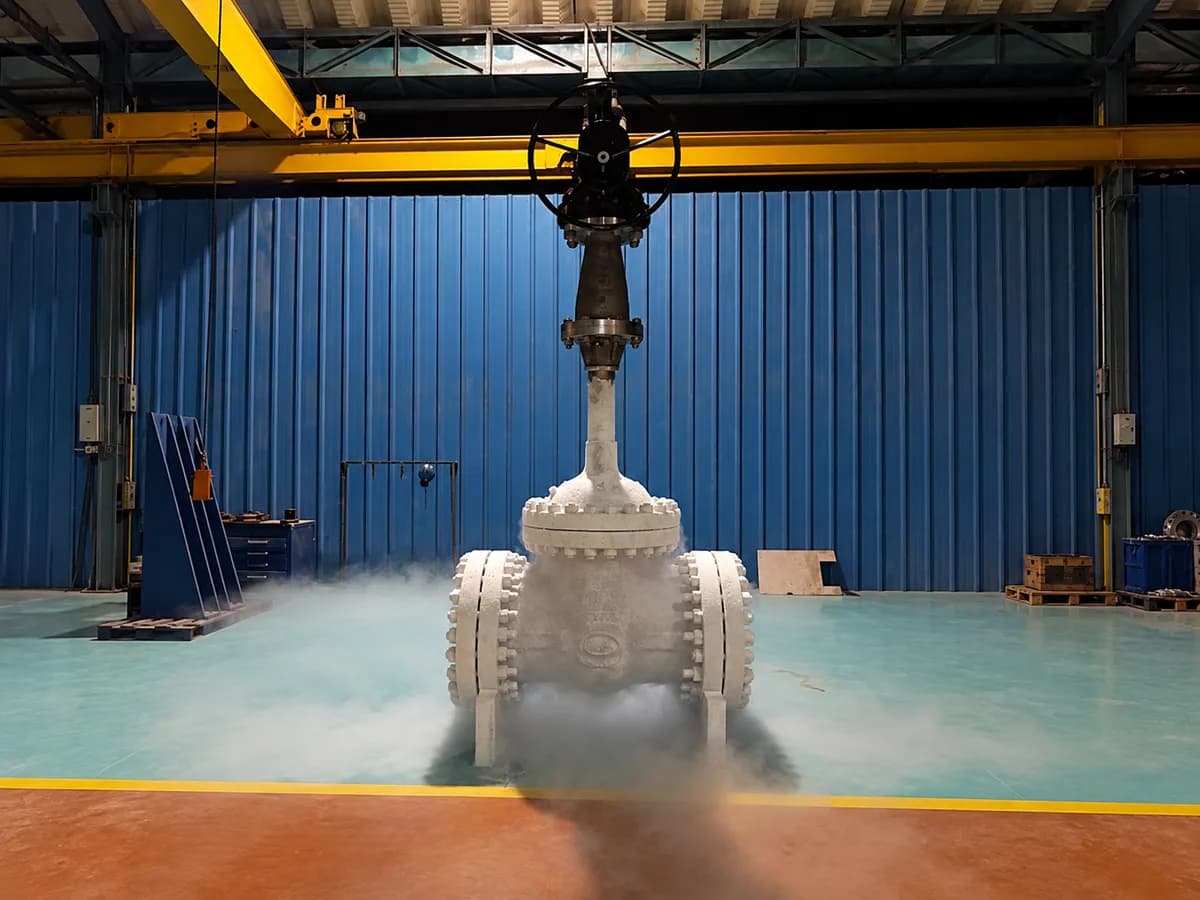
Cryogenic testing evaluates valve performance under specified low-temperature conditions. Depending on the test procedure, this may include:
- External leakage through the body and stem sealing arrangement.
- Seat leakage at the specified test pressure.
- Operating torque or thrust under cold conditions.
- Functional operation during and after cooling.
- Performance of materials and sealing components at the test temperature.
Testing is particularly important because a valve that operates correctly at ambient temperature may behave differently after cooling and component contraction.
5. Cryogenic Valve Applications in African LNG Projects
Africa's LNG industry includes established export facilities and developing gas projects that require reliable low-temperature equipment.
Nigeria: Nigeria LNG's operations on Bonny Island provide an established example of LNG export infrastructure. Cryogenic valves are relevant to liquefaction trains, storage systems, loading facilities and process piping.
Mozambique: LNG developments in the Rovuma Basin create demand for equipment designed for liquefaction, cryogenic storage and export operations. Requirements depend on the scope and status of each project.
Mauritania and Senegal: The Greater Tortue Ahmeyim development demonstrates the importance of LNG processing and export infrastructure in the region. Cryogenic valves support relevant LNG handling and transfer systems.
Republic of the Congo: Congo LNG provides another example of LNG production and export infrastructure in Central Africa, where suitable low-temperature valves are required for liquefied gas handling. Across these markets, valve selection should account for operating conditions, applicable standards, project specifications, maintenance requirements, and spare parts availability.
6. Selecting the Right Cryogenic Valve Supplier
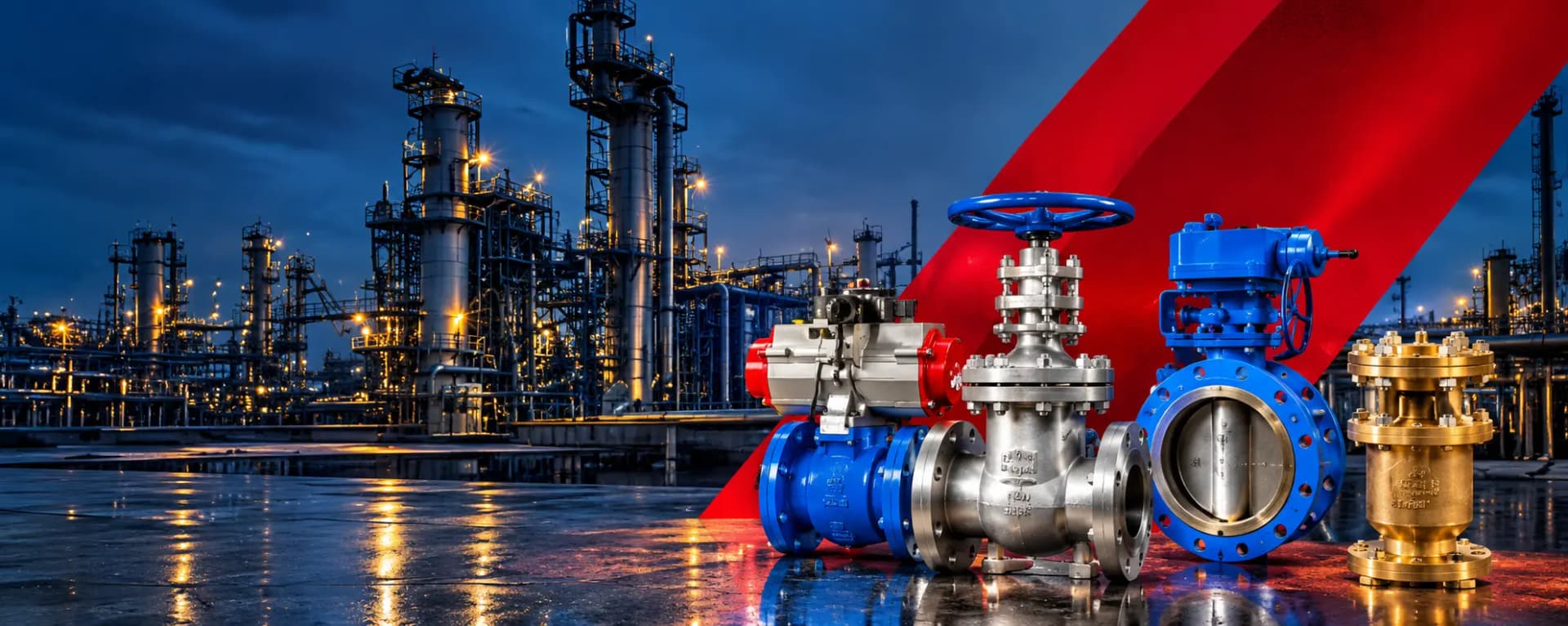
African Valve supplies a range of cryogenic valves for LNG, industrial gas and low-temperature applications, including Cryogenic Ball Valves, Cryogenic Gate Valves, Cryogenic Check Valves, Cryogenic Long Stem Globe Valves, Forged Cryogenic Trunnion Ball Valves and Cryogenic Emergency Cut-Off Valves. These valves can be selected according to minimum design temperature, pressure class, material grade, bonnet configuration, seat and packing requirements, end connections, actuation and testing standards. For LNG projects, buyers should match the valve configuration to the actual operating conditions and required documentation before placing an order.