The Dangote Refinery project in Nigeria is one of the country’s most significant industrial developments, combining crude processing, petrochemical production, storage, pipeline networks, marine facilities and dedicated power generation within one integrated complex.
Located in the Lekki Free Zone in Lagos State, the Dangote Petroleum Refinery has a current crude distillation capacity of about 700,000 barrels per day, with an expansion pathway to 1.4 million barrels per day.
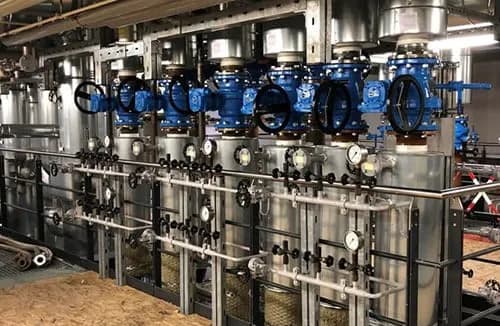
Behind this scale is a large network of refinery process piping, industrial valves and pressure-containing equipment. Crude oil, intermediate hydrocarbons, finished fuels, gas, steam and utility fluids all move through systems operating under different pressures, temperatures and flow conditions. That makes valve selection an important part of refinery engineering, EPC procurement and long-term plant reliability.
Inside the Dangote Refinery Project
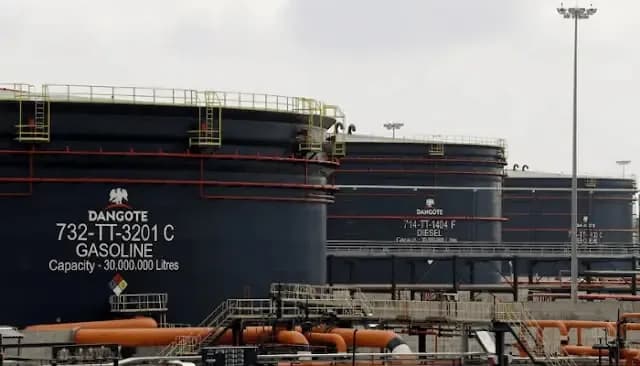
The Dangote Refinery integrates crude and product storage, high-volume transfer systems, truck-loading facilities, marine infrastructure and independent power generation.
Crude oil is transferred to processing units, intermediate streams move between refinery sections, and finished products are routed to storage before dispatch. Each transfer stage creates a different requirement for isolation, flow regulation, reverse-flow prevention or overpressure protection.
This is why a single valve type cannot be used throughout the refinery. A valve selected for a crude transfer line may need different materials, pressure ratings and sealing characteristics from one installed on steam, utility water or a finished-product line.
Engineering Challenges in Refinery Valve Selection
Large refinery systems operate under a wide range of process conditions.
Engineering Condition | Main Valve Requirement |
High-temperature streams | Suitable material, packing and pressure-temperature rating |
High-pressure piping | Correct pressure class, body integrity and testing |
Corrosive fluids | Compatible body, trim and sealing materials |
Hydrocarbon isolation | Shut-off performance and fire-safe requirements |
Large-volume transfer | Bore size, pressure drop and operating torque |
Automated shutdown | Correct actuator sizing and fail position |
Maintenance isolation | Reliable sealing and accessible construction |
Industrial Valves Used in Refinery Operations
- Ball Valves
Ball valves are commonly used in refinery hydrocarbon lines for tight shut-off and quick quarter-turn isolation. Floating ball valves are generally used for smaller sizes and moderate pressure applications, while trunnion-mounted ball valves support the ball mechanically and are suitable for larger sizes and higher-pressure services.
Depending on pipeline requirements, engineers may specify full-bore valves to minimise flow restriction or reduced-bore valves where a smaller flow passage is acceptable. Double Block and Bleed (DBB) ball valves provide two independent seating barriers with a bleed point between them, allowing the cavity to be depressurised to verify isolation.
Selection should also account for the valve's pressure-temperature rating, ball and seat materials, API 607 fire-safe qualification where specified, and API 624 or ISO 15848 fugitive-emission requirements where applicable.
- Gate Valves
Gate valves are used for on-off isolation where a relatively unrestricted flow path is required when fully open.
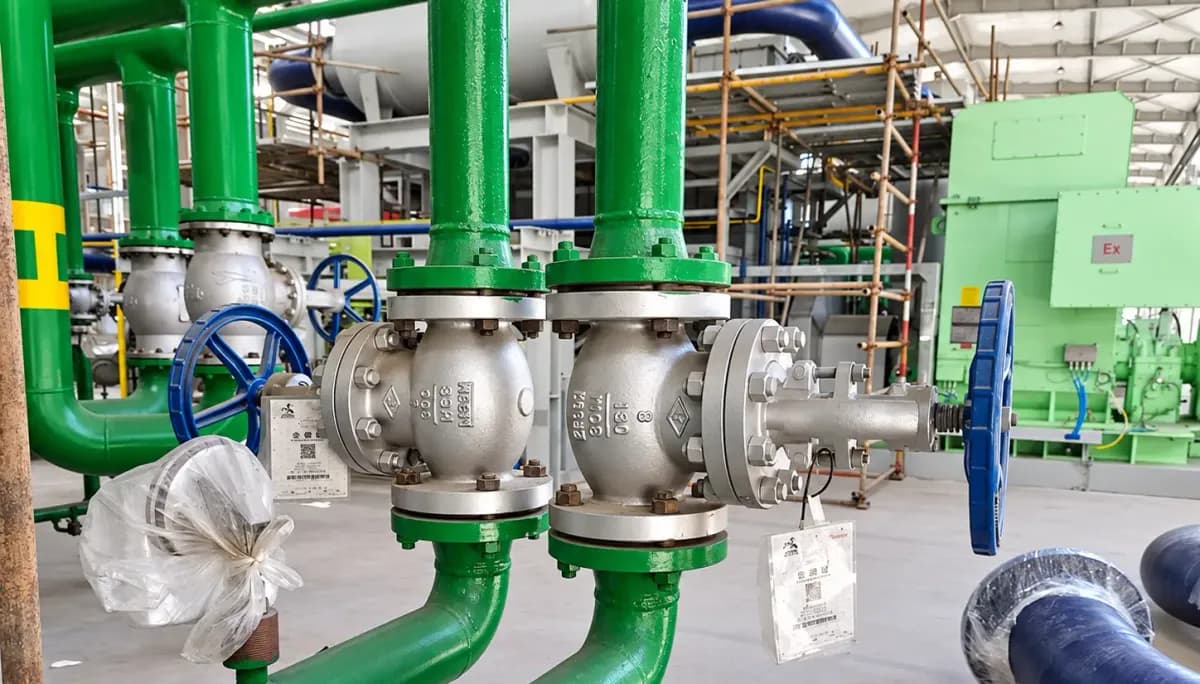
They may be applied in process piping, hydrocarbon transfer systems, steam lines and utility services. Conventional gate valves are generally not preferred for continuous throttling because partially open operation can increase wear on the gate and seating surfaces.
- Globe Valves
Globe valves are better suited to applications requiring flow regulation.
Their internal design creates a higher pressure drop than a fully open gate or ball valve, but it provides better control over changing flow conditions.
In refinery systems, globe valves may be used in steam, utility, bypass and selected process services.
- Check Valves
Check valves prevent reverse flow in pump discharge and process lines.
Swing, lift and dual-plate designs have different closing characteristics. Selection should consider flow velocity, pressure drop, installation orientation and the potential for valve slam or pressure surges.
- Safety and Relief Valves
Safety and relief valves protect designated equipment against specified overpressure conditions.
Selection depends on set pressure, relieving capacity, fluid state, allowable overpressure, back pressure and discharge conditions. These requirements should be established by the process design and included in the purchase specification.
Materials for Refinery Valve Service
Material selection depends on process fluid, pressure, temperature and corrosion conditions.
Carbon steel may suit many compatible hydrocarbon and utility services. Stainless steel can be selected where improved corrosion resistance is required, while alloy steels may be used for elevated-temperature applications. Duplex, super duplex and nickel alloys may be considered for more demanding corrosive environments.
The review should cover all wetted components, including the ball, wedge, disc, stem, trim, seat, packing and gaskets.
For sour hydrocarbon service, the project may also require materials suitable for resistance to sulphide stress cracking and other environmental cracking mechanisms.
Pressure, Temperature and Actuation
A valve’s pressure class does not establish its allowable pressure at every temperature.
Engineers should verify the pressure-temperature rating for the selected body material and design standard. Seat, packing and gasket limits also need to be checked because these components may have lower temperature limits than the valve body.
Automated valves may use pneumatic, electric or hydraulic actuators. Actuator sizing should consider the required torque or thrust, maximum differential pressure, operating time, control signal and required fail position.
For emergency shutdown applications, fail-open or fail-closed action should match the plant’s safety requirements.
API and ASME Standards for Refinery Valves
Common refinery valve standards include:
Requirement | Common Standard |
Steel gate valves | API 600 |
Compact forged valves | API 602 |
Pipeline valves | API 6D |
Industrial ball valves | API 608 |
Butterfly valves | API 609 |
Inspection and testing | API 598 |
Valve design / pressure-temperature | ASME B16.34 |
Flanged connections | ASME B16.5 / B16.47 |
Large EPC projects may also require material test certificates, heat-number traceability, pressure-test reports, NDT records, PMI reports and third-party inspection.
What Procurement Teams Should Include in an RFQ
For refinery valve enquiries, buyers should provide:
Valve type
Size
Pressure class
Process medium
Design pressure and temperature
Body and trim material
Seat requirement
End connection
Actuation
Fire-safe requirement
Sour-service requirement where applicable
Standards and testing requirements
Quantity
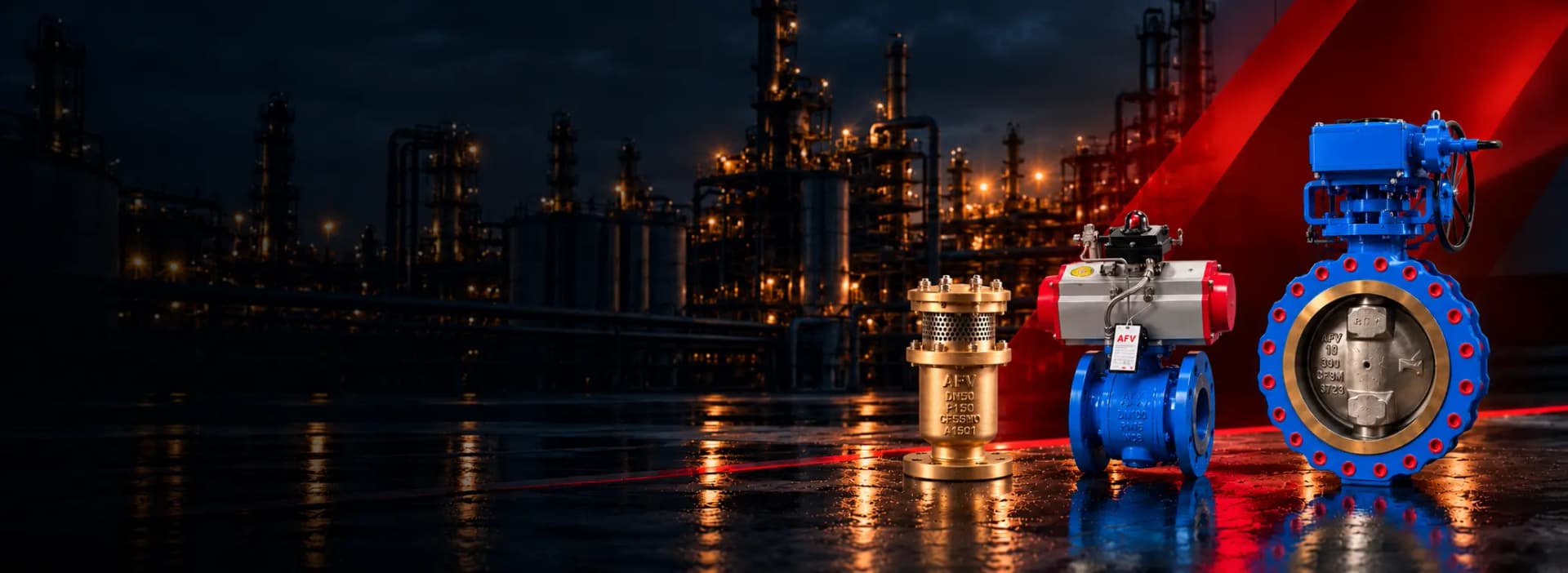
Providing these details helps reduce technical clarification and allows the supplier to review the required configuration against the project specification. The Dangote Refinery project demonstrates why refinery valves must be selected according to the actual process conditions rather than by valve type alone. African Valve supplies ball valve, gate valve, globe valve, check valve, safety valve, butterfly valve and actuated valves for refinery, petrochemical and oil and gas applications in Nigeria and other African markets.African Valve for Nigerian Refinery Projects
For refinery and EPC enquiries, project teams can submit valve schedules, datasheets or RFQs with operating conditions, material requirements, actuation details and inspection requirements for technical review and quotation.