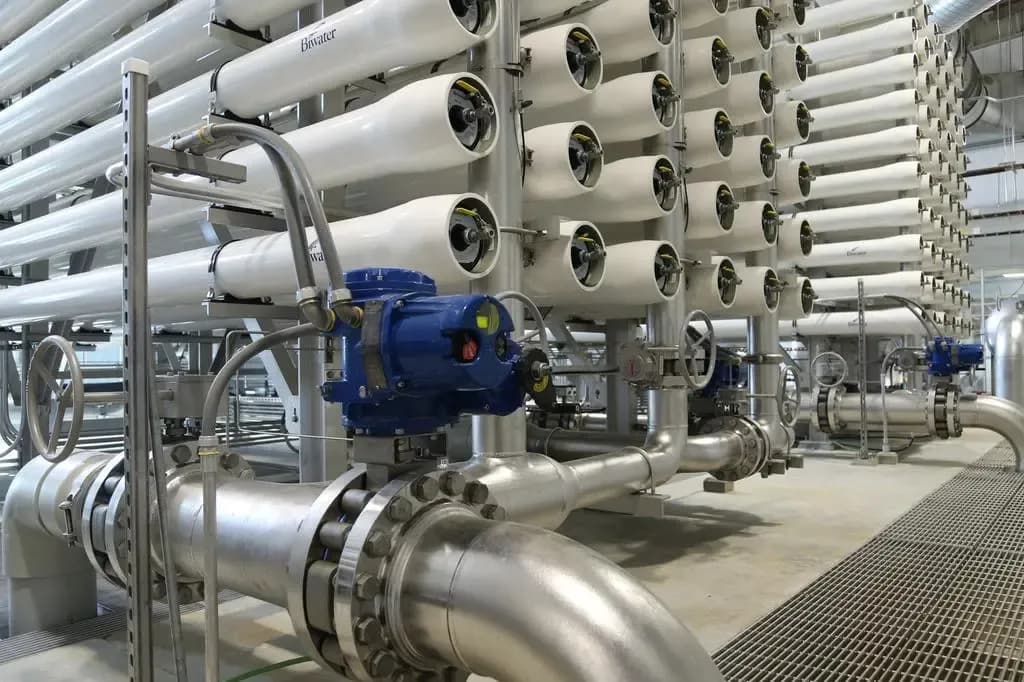
Water scarcity is putting greater pressure on communities and industries across Africa to secure reliable freshwater supplies. For many coastal regions, large-scale desalination is part of the solution. Seawater reverse osmosis (SWRO) is widely used because it removes dissolved salts from seawater through membrane filtration.
Large desalination programmes in Egypt, Algeria, Morocco and South Africa are increasing demand for seawater-resistant valves, high-pressure SWRO equipment and corrosion-resistant materials. Membranes and pumps are at the heart of a desalination plant, but they are only part of the system. Valves are also needed throughout the facility, from seawater intake and pretreatment to high-pressure processing, chemical dosing and treated-water distribution. Choosing the right valve helps operators isolate equipment, control flow and protect pipelines and pumps.
How a Large-Scale Desalination Plant Operates
The process starts when seawater enters the plant through intake pipelines and screening equipment, which removes larger debris. It then goes through pretreatment to reduce suspended solids and other contaminants that could foul or damage the reverse osmosis membranes. Depending on the quality of the incoming water, this stage may use media filters, cartridge filters and chemical dosing.
Once the water has been pretreated, high-pressure pumps push it through semi-permeable membranes. Freshwater, called permeate, passes through the membranes, while the remaining concentrated brine is carried away through a separate line. Before the permeate is stored and distributed, it is usually post-treated through processes such as remineralisation and pH adjustment. The conditions at each stage are different, which is why valve type, pressure rating and material all need to be considered carefully.
Industrial Valves for Desalination Plants
There is no single valve that suits every part of a desalination plant. The choice depends on the job the valve needs to do, along with the line size, operating pressure, flow conditions and maintenance requirements. Common options include:
Valve type | Main function | Typical desalination applications | Selection considerations |
Butterfly Valve | Quarter-turn isolation for large pipelines. | Seawater intake, pretreatment, filtration and treated-water distribution. | Compact for large-diameter lines; offset designs can offer tighter shut-off. |
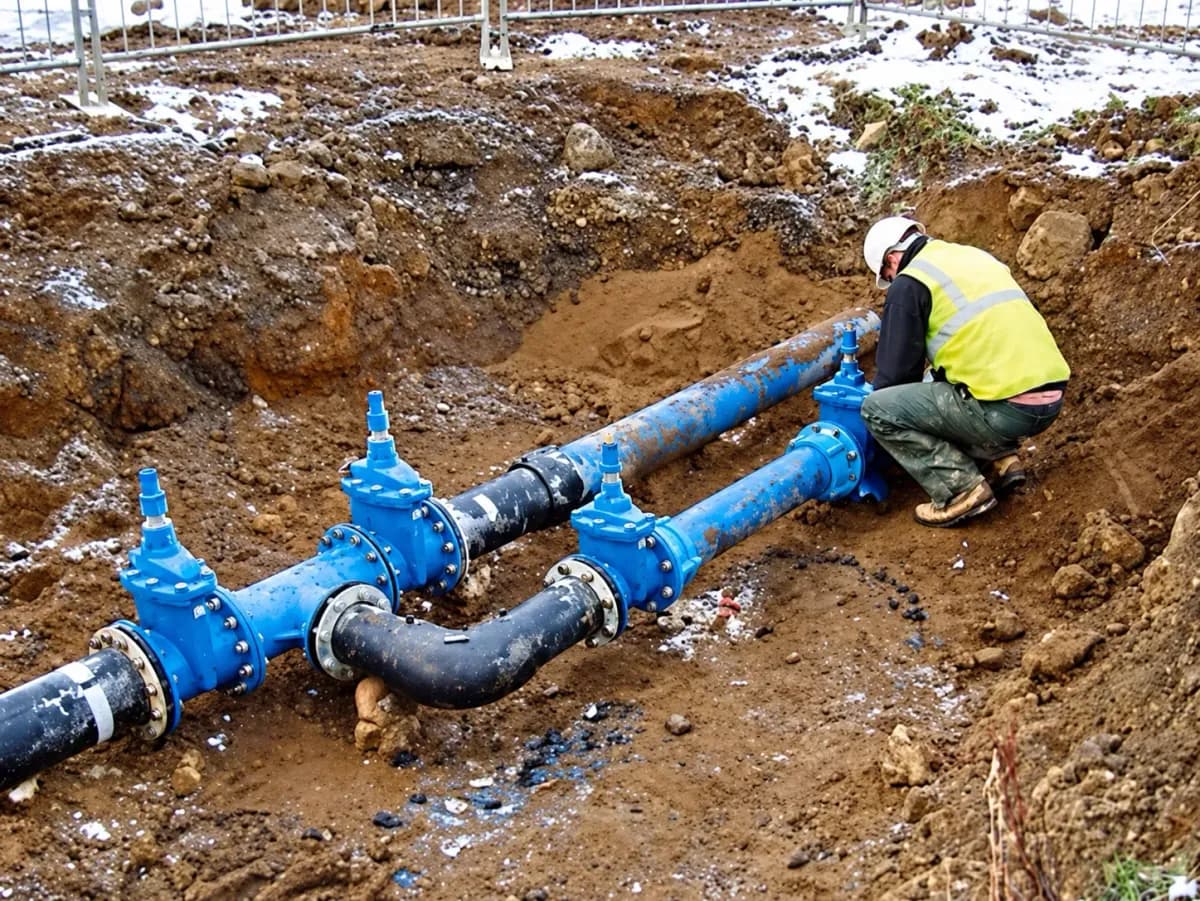
Gate Valve | On-off isolation with a low-resistance flow path when fully open. | Water transmission lines and pump isolation. | Best used for isolation rather than continuous throttling. |
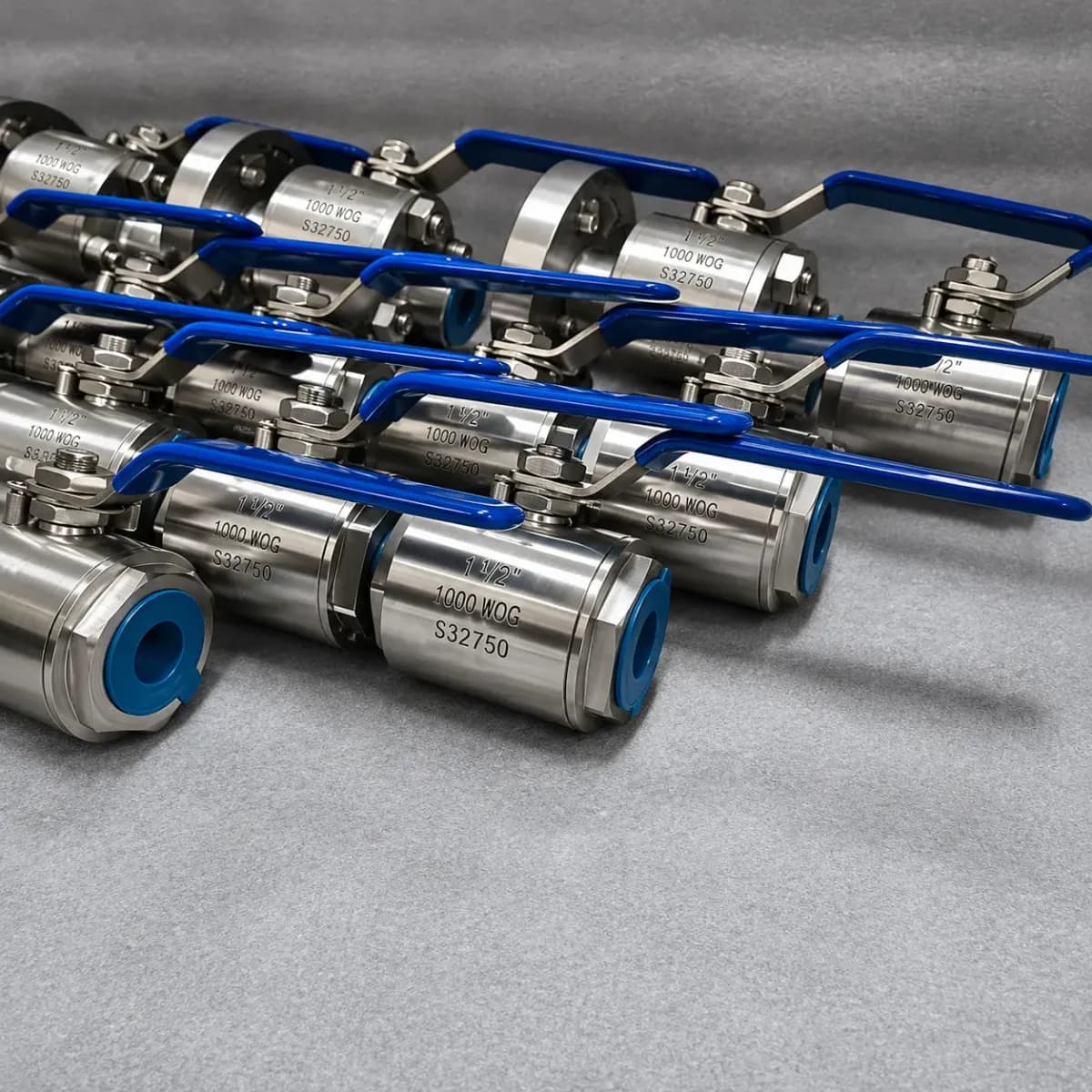
Ball Valve | Rapid operation and tight shut-off. | Chemical dosing, process connections and smaller-bore lines. | Choose floating or trunnion-mounted designs to suit valve size and pressure. |
Check Valve | Automatically prevents reverse flow. | Pump discharge lines and pipelines vulnerable to backflow. | Select the type to suit flow direction, installation position and surge risk. |
Globe Valve | Regulates and throttles flow. | Selected dosing and process-control lines. | Useful when flow needs adjustment; allow for the pressure drop. |
Diaphragm Valve | Isolates fluid using a flexible diaphragm. | Chemical treatment and dosing services. | Check diaphragm and body compatibility with the chemicals being handled. |
Engineering Challenges and Material Selection
Seawater contains chlorides that can cause pitting and crevice corrosion when unsuitable materials are used. The risk is not limited to the valve body: the disc, stem, fasteners, seat and other wetted parts also need to withstand the service conditions. Material selection should take account of the full valve assembly, as well as water chemistry, temperature, flow velocity and operating conditions.
Duplex stainless steel is often considered for chloride-bearing services because it offers higher strength and better corrosion resistance than conventional austenitic stainless steels. For more demanding seawater duties, super duplex can provide stronger resistance to pitting and crevice corrosion. Titanium may be suitable in particularly aggressive environments, while aluminium bronze is used in selected marine applications. Carbon steel can also be used for protected or non-aggressive water services, provided the coating and corrosion-control measures are suitable. The final choice should be checked against the actual chloride level, temperature and project corrosion assessment. Internal coatings, elastomers, stem seals and fasteners also deserve attention, as these components can affect the valve's service life.
Material | grade | Typical application |
Stainless steel | ASTM A351 CF8M | Selected freshwater and chemical services; assess carefully before seawater use. |
Duplex stainless steel | ASTM A995 Grade 4A | Chloride-bearing water applications, subject to corrosion assessment. |
Super duplex stainless steel | ASTM A995 Grade 5A | More demanding seawater duties where stronger corrosion resistance is needed. |
Titanium | ASTM B367 | Aggressive seawater service; specify the required titanium grade. |
Aluminium bronze | ASTM B148 C95800 | Selected marine and seawater applications. |
Carbon steel | ASTM A216 WCB | Protected water service with suitable coating and corrosion control. |
Pressure Ratings, Standards and Testing
Pressure conditions are not the same throughout a desalination plant. Intake and treated-water distribution lines usually operate at lower pressures than the reverse osmosis feed system. High-pressure seawater RO systems commonly operate around 55–80 bar, although this is a typical operating range rather than a design value for every plant. The valve pressure rating must be confirmed against the project's design conditions. Engineers should also check differential pressure, shut-off requirements and possible pressure surges.
A number of international standards may be referenced when specifying desalination valves. These include API 600 for bolted-bonnet steel gate valves, API 608 for metal ball valves, API 6D for pipeline valves, API 609 for butterfly valves and API 598 for inspection and testing. ASME B16.34 covers valve design and pressure-temperature ratings, while ASME B16.5 and B16.47 cover flanged connections. AWWA C504 may be relevant to rubber-seated butterfly valves used in waterworks service. The applicable standards should always be confirmed against the valve design and project specification.
What to Include in a Desalination Valve RFQ
When requesting a quotation, the more useful information a supplier receives, the easier it is to assess the right valve for the application. Procurement teams should include:
Technical information | Project information |
Valve type, size and configuration | Design and operating pressure |
Process medium and chloride level | Body, trim, seat and sealing materials |
End connection and flange standard | Manual or actuated operation |
Applicable design and test standards | Inspection, certification and quantities |
For critical services, it is also worth stating whether material certificates, pressure-test records, positive material identification (PMI) or third-party inspection are required. Providing clear operating details at the enquiry stage helps avoid mismatches in material, connection type or pressure class later in the project.
Supporting African Water Infrastructure
African Valve supplies Butterfly Valves, Ball Valves, Check Valves, Control Valves and Diaphragm Valves for desalination and water-treatment projects across Africa. For seawater and high-chloride service, Duplex Valves, Super Duplex Valves and Aluminium Bronze Valves can be selected based on corrosion resistance, pressure and operating conditions.
Related Topics